
Neural Democracy
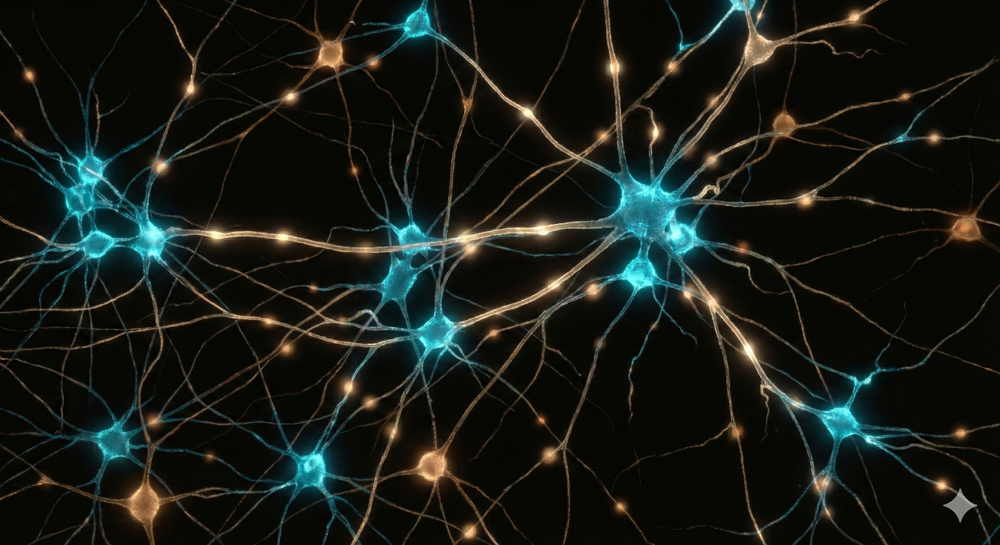
Your brain doesn't vote the way Congress does.
When you touch a hot stove, your hand doesn't wait for your prefrontal cortex to hold a committee meeting. The pain receptors in your fingers send a signal so urgent, so weighted by their direct proximity to the threat, that your arm moves before your conscious mind registers what happened. The cortex confirms the decision after the fact.
The neurons closest to the issue — the ones actually being burned — have their input weighted more heavily than the neurons elsewhere in your body that aren't immediately affected. The decision is fast, appropriate, and responsive to who's actually impacted.
This is the principle behind neural-democracy.
Scope note: This page is a plain-language overview of neural-democracy. The Neural Democracy section of the NUC Creed contains the complete constitutional framework and governs wherever additional detail or interpretation is required.
The Problem with Equal Votes
In a standard democracy, every vote on every issue counts equally. Imagine a community deciding whether to move a neighborhood bus stop. Daily riders depend on it, households beside each possible stop live with the traffic and noise, and members across town may never use it. Everyone may be affected, but not everyone is affected equally.
Equal ballots erase those differences. A large group with little at stake can override a smaller group that will live with a decision every day.
Technology makes it possible for everyone to participate directly. Neural-democracy adds a way to recognize different stakes, so the system can hear the whole community without pretending every consequence is the same.
What Neural Democracy Is
Like the plasticity of the brain — designed to remake itself anew with every action — our neural-democracy constantly develops through its daily practice. It's self-guiding, self-driving. There's no final arbiter, no absolute authority standing on high. The system is always subject to change through an embedded process of voter-regulated updates.
Instead of a shadow oligarchy, corrupt Supreme Court, or unpopular President with veto power, there's only the People's voice, expressed through a system that employs a number of consequential innovations. We have the ability to self-correct through direct input from the electorate, and we've introduced variables defined by the governed themselves — how lasting a decision should be before it can be altered, how proximity to an issue should influence how a member's preference is counted.
Just as the Internet develops with its userbase, neural-democracy's effectiveness is derived from maximizing participation — the forging pressure perpetually evolving our unique form of governance.
The Innovations
Input Bias
Not all votes are weighted equally, and that's the point. The weight of your ballot is adjusted based on your pertinent relationship to the issue at hand. Those most affected carry proportionately more weight.
Consider a vote on operating hours for a shared Community workshop. People who use it every day might cast ballots weighted at 2.5. Nearby residents affected by early-morning or late-night noise might carry 1.5. Members who live far away and rarely use the workshop carry 1.0. Nobody is silenced -- everyone votes -- but the voices most connected to the decision are heard more clearly.
This solves one of democracy's fundamental flaws: the ability of a large, disinterested majority to override a small, deeply affected minority.
Frame Effect
Decisions aren't made in a snapshot. The Frame Effect is the dynamic relationship between three variables: total participation rate, majority percentage in favor, and the time frame of sustained consensus.
Once a predetermined minimum number of votes have been cast with a sufficient majority in favor, a countdown clock starts. If the majority consensus drops below the minimum threshold — even a little — the clock stops. When consensus rises to meet the threshold again, the clock restarts from zero. Only after the required consecutive time, where the majority is sustained, does the voting window close and the issue become law.
This prevents emotional stampedes. A community enraged by an incident can't ram through legislation in a weekend of fury — the support must hold through sustained deliberation. But genuine, lasting consensus will always find its way through.
Embedded Position
Not every question is binary. Instead of asking "Should we run a shared shuttle service?" (yes or no), neural-democracy can ask "How many hours per week should the service operate?" -- where 0 hours is embedded as a "no" vote and any larger number expresses a desired level of service. The outcome is the mathematical mean of all participating votes, weighted by input bias.
This captures the nuance that traditional voting destroys. The community decides both whether to provide the service and how much service to provide in a single, integrated decision.
QT Preference Voting
When choosing among multiple options -- such as several festival plans, community projects, or meeting schedules -- NUC uses QT Preference voting, which extends ranked-choice systems by capturing emotional intensity.
For each option, voters mark a thumbs-up (yum), thumbs-down (yuck), or leave it blank (meh). They may additionally highlight one option as their strongest positive preference (like) and one as their strongest negative (loathe). The "like" or "loathe" mark doubles the voter's input bias for that single option.
Here's the critical innovation: if more than a third of the total electorate — not just those who voted, but everyone eligible — casts a "loathe" vote for any option, that option must be revised or dropped, regardless of its score. This establishes a ceiling on how much loathing a community can be forced to swallow.
Status Quo and Noise Reduction
Neural connections that are "used" are reinforced; those that are not are "lost." The brain's principle of "use it or lose it" applies to governance too.
After a law passes, a Status Quo period begins — a forced gap where the law cannot be altered. This creates inertia, allowing the community to actually experience the decision before revisiting it. When the Status Quo period ends, any new challenge must build fresh consensus from zero. Prior votes are erased. The electorate starts clean.
To prevent anchoring and groupthink during active voting, interim vote tallies and individual positions are generally kept hidden. Individual votes expire after two years if not recast. A rolling percentage of the noisiest ballots — those that fail to express a clear preference — are flagged for reconsideration, with voters invited (never required) to clarify their intent.
The goal isn't to suppress dissent. It's to amplify signal and dampen noise — inspired in part by Nobel laureate Daniel Kahneman's final work, Noise: A Flaw in Human Judgment.
Dynamic Leveling and Emergency Action
Dynamic Leveling is like steering: a driver continually makes small corrections as the road, traffic, and weather change. Governance works the same way. Each round of experience and adjustment should move the community toward a more workable outcome without pretending the ideal is fixed.
But what happens when there's no time for deliberation? If testing suggests that a Community's water supply may be contaminated, people need direction before the ordinary process can finish.
For urgent, Cult-wide matters, River Sages may initiate an Ionotropic Sage Declaration (ISD). Ordinary governance accumulates input slowly; emergency action fires quickly. The critical safeguard is that any ISD is subject to countermand by a strong majority of the electorate. Sages can act fast, but the People always have the final word.
Perpetual Issues
The system governs itself. The core metrics of neural-democracy — input bias weights, Frame Effect numbers, participation thresholds, category definitions — are not fixed. They are Perpetual Issues, subject to continuous, iterative adjustment by the membership. The rules of the game are always in play.
How We're Organized
NUC's governance plays out across four levels: local, neighborhood, emergent, and global.
Water Bodies (the Love side) organize as Spheres, Communities, Cities, and Federations. All Communities are bound to practice neural-democracy. Citizens participate in transparent, shared governance where accountability replaces punishment and vulnerability replaces posturing. Community size is capped near Dunbar's number — roughly 150 people — because the brain isn't wired for an excessive number of intimate ties, and a functioning neural-democracy requires enough connections to operate, just as many synapses connect a variety of neurons to create a single brain.
Rock Bodies (the Power side) organize as Clades, Tribes, Leagues, and Alliances. They may govern through any form they choose -- absolute hierarchy (Tower), pure anarchy (Square), or anything in between. A Tribe might be a dictatorship. A Clade within that Tribe might be a democracy. High-intensity Rock practice must be adult, informed, specific, ongoing, and revocable, with meaningful exit from the Body and from NUC always available. No practice may be imposed on non-consenting people. Neither a Tribe nor a Clade can dictate how the other's members vote on their own internal affairs.
The River balances both sides. River Sages are professional, temporary clergy — paid for their expertise, rotated to prevent entrenchment, and categorically balanced across Love, Power, Mixture, and Wandering perspectives. Active Sages handle specific cases; Inactive Sages maintain the big picture. No Sage works on cases involving their own Bodies. Their authority is derived entirely from the collective will of the membership, never from personal status.
At emergent levels — where multiple Tribes form a League, or multiple Communities form a City — governance is strictly neural-democratic. Each lower-order Body acts as a single voter within the higher-order structure, and the process continues upward. This is intended as a direct reflection of emergent complexity: the way atoms become molecules, molecules become cells, and cells become minds.
No Leader. Ever.
The collective voice of NUC's membership is represented by Saint TJ — not a person, but an emergent avatar, depicted with the head of a happy dog to ensure no individual can claim to have created or lead the Cult. Saint TJ is not one of us, but all of us.
To prevent the River itself from calcifying into the kind of power structure neural-democracy was designed to replace, two types of Inspector General teams can be convened at any time. Case IGs are triggered by the membership voting to investigate a specific concern — a suspected misuse of an ISD, for example. Health IGs are randomly assigned audits of River operations. Both are staffed entirely by non-Sages, and their findings are made public. Reforms go directly to a vote, bypassing the normal proposal process. Reforms may include the removal of Sages for cause.
Why This Matters Beyond NUC
Neural-democracy isn't just an internal governance system for a religious organization. It's a proof of concept.
If a direct democracy can function at scale — weighting votes by proximity to impact, requiring sustained consensus rather than momentary majorities, continuously recalibrating its own rules, and holding its administrators accountable through structural safeguards rather than trust — then the principles are transferable. To companies, to municipalities, to nations.
We don't claim to have perfected it. The system is designed to be perpetually imperfect, perpetually improving. That's the point. The brain doesn't reach a final state and stop learning. Neither should governance.
Go Deeper
The mechanisms described here are overviews. The Neural Democracy section of the NUC Creed is the governing constitutional source, with the complete framework and worked examples. The NUC Voting Guide carries current procedural specifics and is available to members through our clergy.
Want to understand the philosophy that grounds this system? Read Love, Power, and Purpose.
Want the quick overview? Go back to Start Here.
Have questions? Check the FAQ or reach out at SaintTJ@NovelUniverseCult.org.
Neural-democracy is always subject to change through its own embedded processes. What you've read here is the current expression of a living system — one that will look different tomorrow than it does today, because that's exactly how it's supposed to work.